NEWExplore America's campgrounds on our interactive map

How to Rig a Crankbait

How to Rig a Crankbait
Written By
James Clark
James Clark
Jun 5, 2009
1 minute read

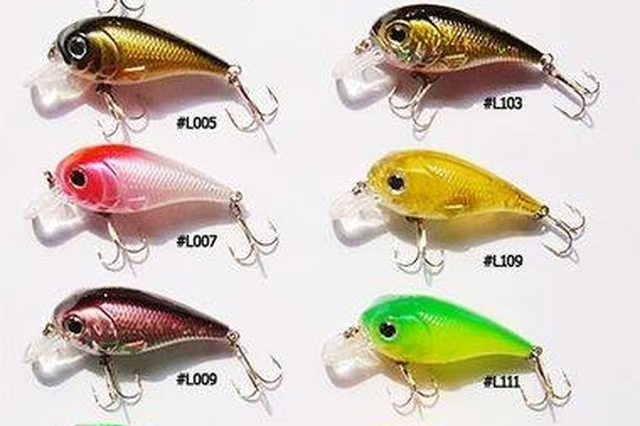
Crankbaits are artificial lures designed to resemble baitfish. They are used primarily for freshwater fishing, and largemouth bass are the typical prey. Proper rigging and presentation of a crankbait is essential to a successful fishing trip. This article covers the two most common ways of rigging crankbaits.

Items you will need

  • Rod & reel

  • Swivels, snapswivels

  • Line cutter or pocket knife

  • Assortment of crankbaits

Buy an assortment of crankbaits designed to sink and swim at different depths. The deep-diving baits have a wide plastic lip on the front, while shallow-swimming baits are thin and light. Having a variety of baits in your tackle box will help you be ready for different fishing conditions.

Tie a crankbait in early spring and cooler months to a Carolina rig, which is a pair of snelled hooks threaded through a rubber nightcrawler worm. Rig the crankbait to the action end of the Carolina rig by tying a short section of monofilament to the back hook on the worm and the C-ring on the lip of the crankbait. This combination creates the illusion of a baitfish in hot pursuit of a nightcrawler, with the objective of luring sleepy bass out of their holes.

Rig a crankbait to a swivel or snap-swivel to cover large areas of water quickly as you search for fish.

Try rigging three different crankbaits rated for different depths to three rods so you can quickly gauge where the fish are hiding.

References

Tips

Expect a crankbait to dive about a foot and a half deeper with every decrease in the weight size of the fishing line, so a crankbait on an 8 lb. test will descend about 6 feet further than the same bait on a 12 lb. test. A snap-swivel allows for rapid change-out of lures, but some fishermen prefer to tie their line directly to the bait itself or no more than a sturdy swivel without the snap. The more links in the chain between you and your quarry, the more likely for a break---and a lost fish. So trading the convenience of a snap-swivel over reliability comes down to a gamble and personal preference.

James Clark

James Clark began his career in 1985. He has written about electronics, appliance repair and outdoor topics for a variety of publications and websites. He has more than four years of experience in appliance and electrical repairs. Clark…

Sponsored
Gone Outdoors Logo

Explore the outdoors with the best source for fishing, boating, camping, hunting, firearms, electronics, trailers and towing, maintenance and much more.

Property of TechnologyAdvice. © 2026 TechnologyAdvice. All Rights Reserved

Advertiser Disclosure: Some of the products that appear on this site are from companies from which TechnologyAdvice receives compensation. This compensation may impact how and where products appear on this site including, for example, the order in which they appear. TechnologyAdvice does not include all companies or all types of products available in the marketplace.