
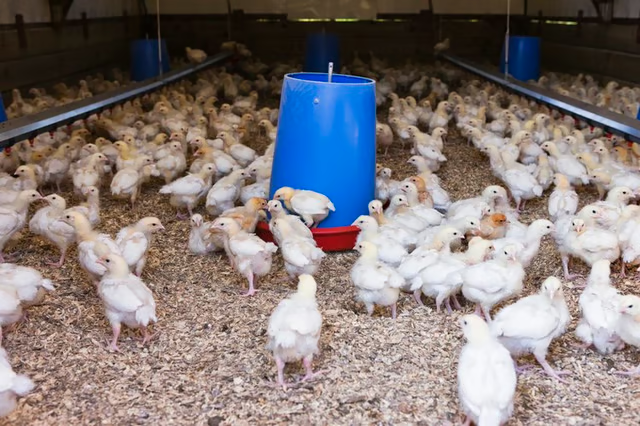
People raise Cornish cross chickens or broilers for meat. They're fast-growing birds which mature to eating weight by 8 to 12 weeks. Hatcheries develop Cornish cross hybrids from white Cornish chickens and white Plymouth rock birds. Raising Cornish crosses differ from raising other chickens because they put on a lot of weight quickly and can suffer from leg injuries, heart failure and other cardiac diseases.
Raising Cornish Crosses
Brooder with heat lamp
Pine shavings
Thermometer
Chick feeder
Chick waterer
Meatbird chick food
Meatbird coop
Fencing
Set up your brooder and brooder lamp 24 hours in advance. Put pine shavings on the flooring and take the temperature of the brooder. The brooder should maintain 95 degrees F before adding in chicks. Be certain there are areas along the sides of the brooder where the chicks can go if they become too hot.
Add feed and water in the feeder and waterer and set in brooder.
Add Cornish cross chicks and observe them. If they move away from the heat lamp, the heat is too warm and you need to lower the temperature of the brooder slightly. If the chicks huddle under the brooder in a tight ball, it is too cold for them and you need to increase the temperature in the brooder. You can do this by raising the heat lamp, if they're too warm, or lowering it if they are too cold.
Feed and water every day. Do not leave feed out for 24 hours. Instead, feed 12 hours on and 12 hours off to slow the growth rate and ensure that the chicks do not suffer from heart attacks and other growth-related diseases.
Replace litter (pine shavings) every day.
Reduce the temperature of the brooder 5 degrees Fahrenheit each week by raising the heat lamp or heat source.
Move chicks to a meatbird coop set up with shelter, fencing, food and water on pasture when the chicks have completely grown their feathers (about two to four weeks time.) Still provide a source of heat such as an electric bulb during the nights or colder times. The meatbird coop should be at ground level and completely fenced so no predator can get in.
Move the coop (if it is movable) every week to fresh ground.
Butcher the chickens when they are at least 4.5 pounds. You can wait until the chickens are larger before butchering, up to 12 weeks or so.